


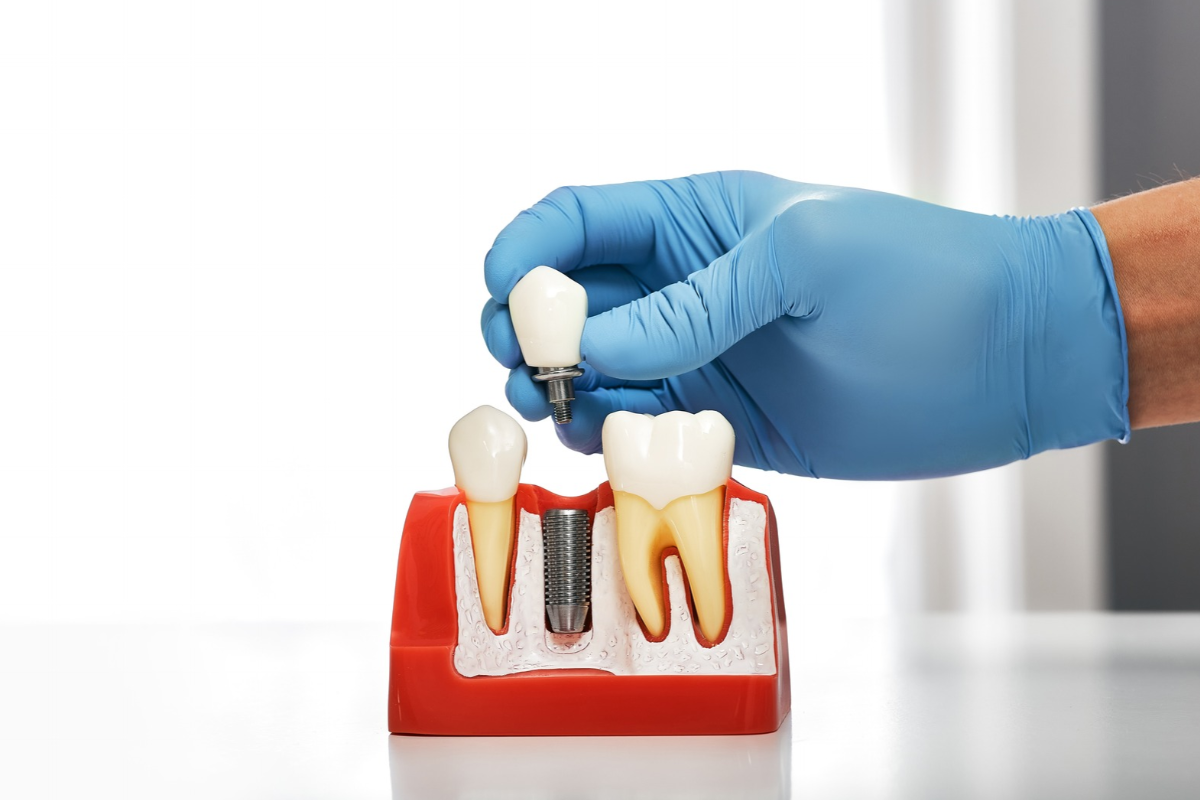
If you’ve been researching dental implants, you’ve probably noticed three terms that keep popping up: the implant post, the abutment, and the crown. They sound technical, and they’re often explained so quickly that it’s hard to tell where one ends and the next begins.
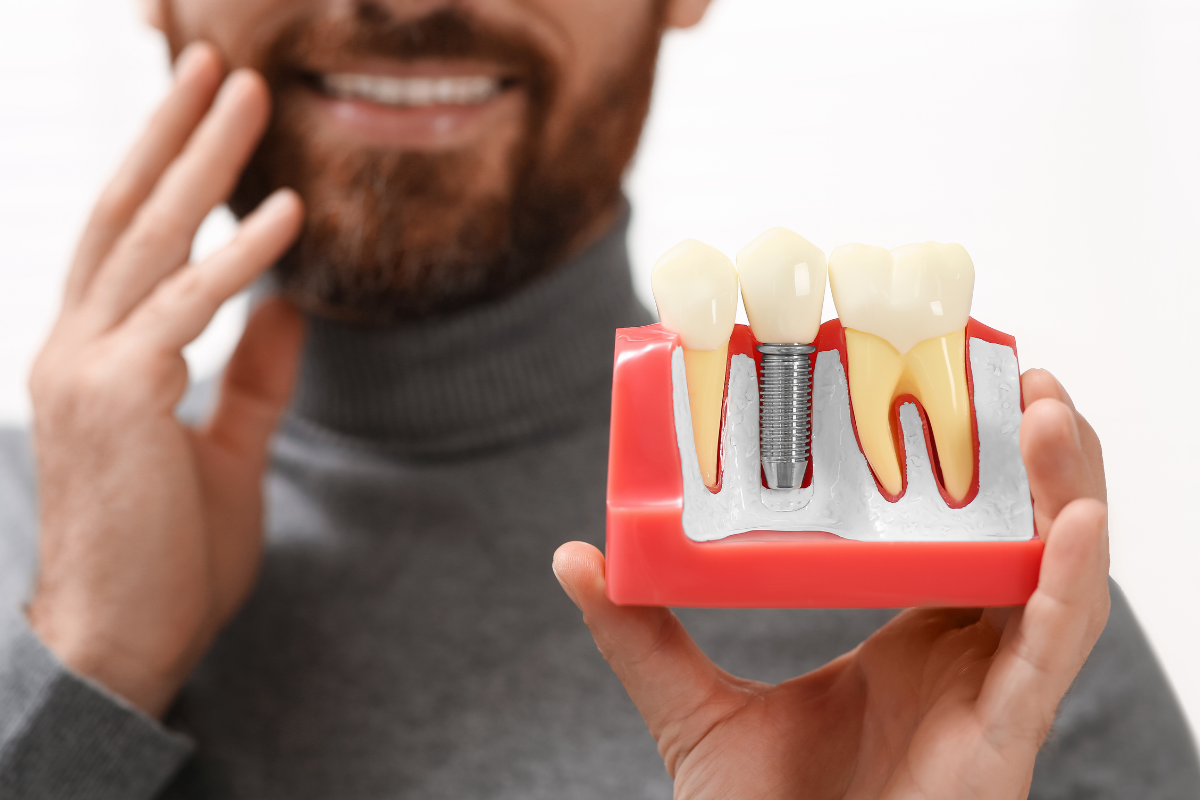
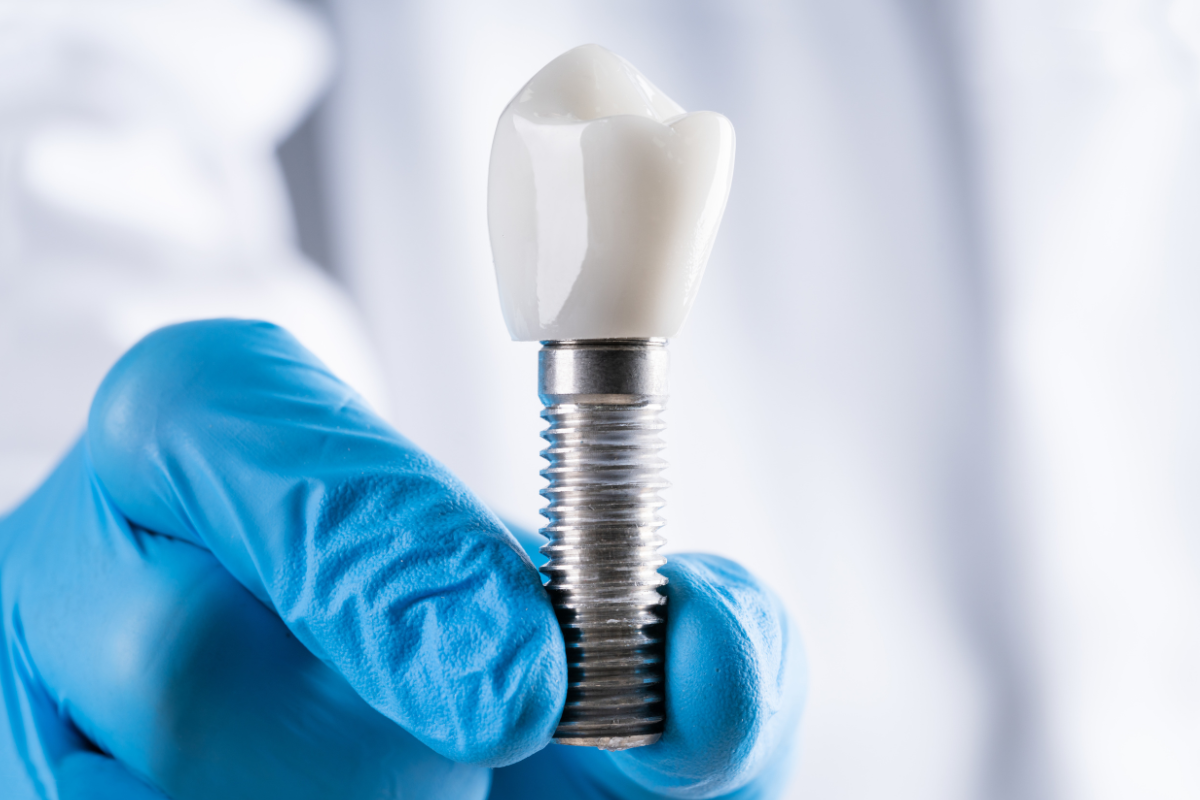
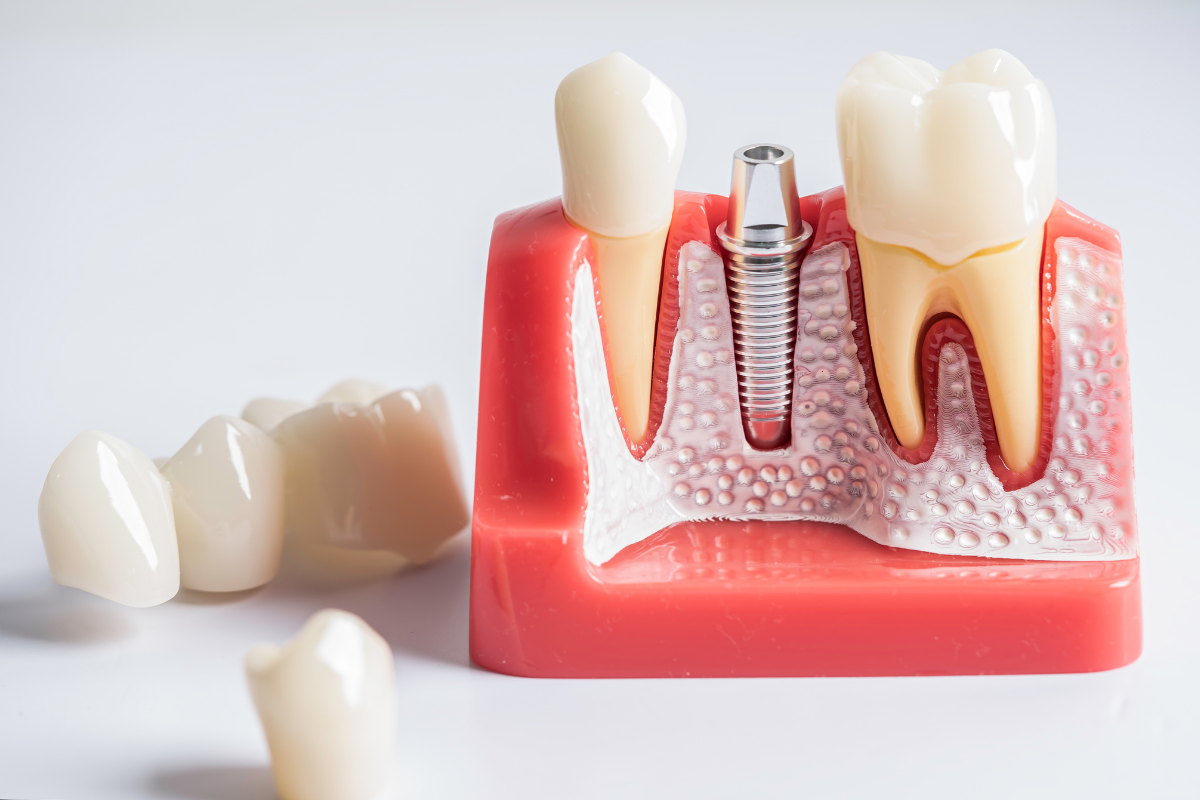
Here’s the simple version: an implant has three parts that work together, much like a natural tooth has a root, a connection to the gum, and a visible top. This guide breaks down what each part does, how they fit together, what they’re made of, and what to ask your dentist so your treatment plan makes sense.
The Quick Answer
- The implant post is the artificial tooth root. It’s placed in your jawbone and anchors everything.
- The abutment is the connector. It attaches to the post and extends through the gum so the crown has something to hold on to.
- The crown is the visible tooth. It’s the part you see, smile with, and chew with.
Think of a flagpole. The post is the pole set into the ground, the abutment is the hardware that connects the flag to the pole, and the crown is the flag you actually see.
Part 1: The Implant Post (The Root)
The implant post, sometimes called the implant fixture, is a small screw-shaped piece that’s surgically placed into the jawbone. It takes the place of the missing tooth’s root.
What It Does
- Anchors the replacement tooth in the jaw
- Fuses with the surrounding bone through a process called osseointegration
- Helps stimulate the bone, which can help preserve it
- Provides a stable base that doesn’t rely on neighboring teeth
What It’s Made Of
Most implant posts are made of titanium, which has a long track record of bonding well with bone. Some posts are made of zirconia, a ceramic material that some patients choose for its tooth-like color or for metal-free preferences. Each has trade-offs, and your dentist can explain which fits your situation.
How Long Does It Take?
After placement, the post needs time to integrate with the bone. This healing period often takes a few months, though timelines vary based on bone quality, location in the mouth, and your overall health. During this time, the post is protected beneath or alongside the gum tissue.
Part 2: The Abutment (The Connector)
The abutment is the piece that most patients haven’t heard of until their treatment plan mentions it. It’s a small connector that attaches to the top of the post and sits at the gumline.
What It Does
- Connects the post to the crown. In most systems, the crown doesn’t attach directly to the post.
- Passes through the gum. It creates a transition between the bone-level post and the visible tooth.
- Positions the crown properly. It sets the angle, height, and alignment so your bite and smile look natural.
- Helps shape the gum tissue around the new tooth.
Types of Abutments
- Stock (prefabricated) abutments come in standard shapes and sizes and are used in many cases.
- Custom abutments are designed for your specific tooth position, gumline, and angle. They’re often chosen where appearance or fit is especially important, such as the front of the mouth.
- Healing abutments (also called healing caps) are temporary pieces placed after the post has integrated to help the gum heal into the right shape before the final abutment and crown are made.
Abutments are typically made of titanium, zirconia, or a combination of materials, depending on the case.
Why a Separate Piece?
A separate abutment gives your dentist flexibility. Bone and gum tissue are rarely perfectly aligned with where the ideal tooth should sit. The abutment bridges that gap and also makes it possible to adjust or replace the crown later without disturbing the post in the bone.
Part 3: The Crown (The Visible Tooth)
The crown is the part of the implant everyone sees. It’s custom-made to match the shape, size, and color of your natural teeth, and it’s designed to work with your bite.
What It Does
- Restores your ability to chew comfortably
- Fills the gap in your smile
- Supports clear speech
- Helps keep neighboring teeth from drifting
Common Materials
- Porcelain-fused-to-metal: A metal base with a porcelain exterior
- All-porcelain or all-ceramic: Often chosen for a natural appearance
- Zirconia: A strong ceramic that’s widely used, including for back teeth
Your dentist will recommend a material based on the tooth’s location, your bite forces, any grinding habits, and your goals.
Screw-Retained vs. Cemented Crowns
- Screw-retained crowns are held in place by a small screw, which can make them easier to remove if repairs are needed.
- Cemented crowns are attached with dental cement, which can create a more seamless top surface. It’s important that any excess cement is fully removed, since leftover cement can irritate the gums.
Neither is automatically better. The right option depends on the position of the implant and your dentist’s judgment.
How the Three Parts Fit Together
Here’s how the sequence typically works.
- Evaluation and planning. Your dentist reviews your history, examines your mouth, and usually takes X-rays and often a 3D scan to look at your bone.
- Post placement. The implant post is placed in the jawbone under local anesthesia, with other comfort options sometimes available.
- Healing. The bone integrates with the post over a period of months.
- Abutment placement. The abutment is attached, either at a second stage or sometimes at the time of surgery.
- Gum healing. The tissue settles around the abutment.
- Crown placement. The final crown is made, fitted, and secured.
Not every case follows this exact order. Some patients need a bone graft first, and in certain situations, teeth can be placed on the same day as the post. Your dentist will explain what applies to you.
One-Piece vs. Two-Piece Implants
Most implants are two-piece systems, where the post and abutment are separate parts. Some systems use a one-piece design, where the post and abutment are combined into a single unit. One-piece designs are used in select cases, and the best choice depends on your anatomy and treatment goals. Ask your dentist what system they plan to use and why.
What Can Go Wrong With Each Part?
Implants have high success rates in general, but no outcome can be guaranteed, and each part has its own possible issues.
- Post: Failure to integrate with the bone, or later bone loss from infection (peri-implantitis). Smoking, uncontrolled diabetes, and gum disease can raise risk.
- Abutment: A loose screw or, rarely, a fracture. Loosening can cause wobbling or discomfort.
- Crown: Chipping, wear, a loose crown, or a bite that needs adjusting. Grinding can add stress.
The advantage of a modular design is that many crown and abutment problems can be fixed without replacing the post. Contact your dentist if something feels loose, uncomfortable, or “off.”
Caring for All Three Parts
Implants can’t get cavities, but the gum and bone around them can still develop infection. To protect your investment:
- Brush twice a day and clean between teeth daily, including around the implant
- Ask about interdental brushes or a water flosser
- Keep regular checkups and professional cleanings
- Avoid tobacco and nicotine, which raise risk
- Wear a nightguard if you grind your teeth
- Avoid chewing ice or using your teeth as tools
- Report any changes early, such as swelling, bleeding, or a shifting crown
How to Read Your Implant Treatment Plan
If your plan lists several separate items, here’s what they usually mean:
- Implant placement or surgery: The post.
- Abutment: The connector.
- Crown or restoration: The visible tooth.
- Bone graft, sinus lift, or extraction: Preparation steps, if needed.
- Imaging or 3D scan: Planning tools.
Questions worth asking:
- Which parts will I need, and why?
- Will each piece be done in one visit or several?
- Who will place the post, and who will make the crown?
- What materials do you recommend?
- What does maintenance look like?
- What are the alternatives, such as a bridge or partial denture?
Finding Dental Implants in McKinney, Texas
Implants involve surgical and restorative steps, so it makes sense to choose a team that explains everything clearly and coordinates each phase carefully.
At Innovative Dental Specialists of McKinney, we provide dental care for patients in McKinney, Texas, and nearby communities. If you’re researching McKinney dental implants and want to understand how each part of your treatment fits together, our team can examine your mouth, review your imaging, and explain your options in plain language. Our services are designed to help you feel informed and comfortable at each step.
When you visit, you can expect:
- A thorough exam and the imaging needed to evaluate your bone
- A clear explanation of each part of your treatment plan
- A discussion of materials, timelines, and alternatives
- Straightforward guidance without pressure
Frequently Asked Questions
Is the abutment part of the implant or part of the crown?
It’s generally considered part of the implant system. It connects the post, which sits in the bone, to the crown, which is the visible tooth. In some designs, it’s combined with the post or crown.
Why can’t the crown attach directly to the post?
In many systems, it can’t, because the abutment adjusts the angle, height, and position so the crown fits your bite and gumline correctly. In some designs, the connection is built into the crown or post.
Can the crown be replaced without replacing the implant?
Often, yes. If the post is healthy and stable, a worn or damaged crown can frequently be replaced, though your dentist will need to evaluate the specific situation.
How long does the whole process take?
It varies widely. Healing time, whether you need a bone graft, and the type of restoration all affect the timeline. Your dentist can give you a realistic estimate after an exam.
Is an implant painful?
The area is numbed during procedures, and most people describe soreness afterward that’s manageable with the pain relief your dentist recommends. Your experience may vary.
Ready to Understand Your Options?
Knowing what each part does makes it easier to evaluate a treatment plan and ask the right questions. The post anchors, the abutment connects, and the crown completes the smile.
If you’re considering a dental implant or want a second opinion on a treatment plan, contact Innovative Dental Specialists of McKinney to schedule a consultation. Our team is here to provide clear answers and caring, patient-focused treatment.

New Patients Appointments Welcome!
