


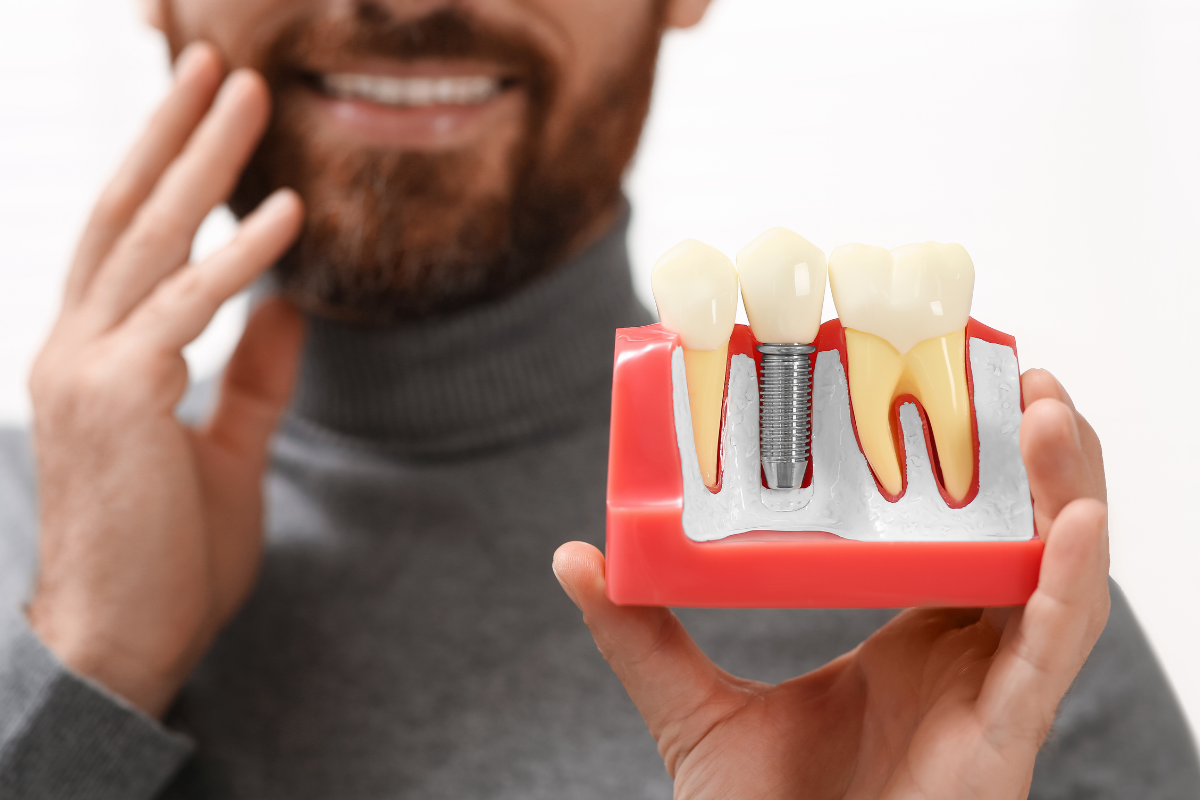
Yes, having natural teeth does not prevent you from getting dental implants. In fact, many people who receive dental implants still have most of their natural teeth. Dental implants are designed to replace individual teeth that are missing or cannot be saved, while the remaining healthy teeth can continue to function normally.
The important question is not how many natural teeth you have left. It is which teeth are missing, the condition of the remaining teeth and gums, the available jawbone, your bite, and the type of restoration being considered.
If you are missing one or several teeth but still have healthy teeth around the spaces, an implant dentist in McKinney can evaluate how an implant-supported restoration can fit into your existing smile rather than replacing teeth unnecessarily.
Can You Have Dental Implants With Natural Teeth?
Yes. Dental implants can be used when a patient has a combination of natural teeth and replacement teeth.
For example, someone might have:
- One missing molar while the rest of the teeth are healthy
- A missing front tooth caused by an injury
- Several missing teeth in different areas of the mouth
- A tooth that cannot be saved because of severe damage or disease
- Natural teeth on both sides of an area where a tooth is missing
In these situations, the goal is generally to replace the teeth that need replacement while preserving healthy natural teeth whenever possible.
This is different from full-arch implant treatment, which is designed for patients who have lost most or all of the teeth in an arch.
Why Don’t Dental Implants Require You to Replace All Your Teeth?
A dental implant is intended to replace a missing tooth root. It is not designed to replace a healthy natural tooth simply because an implant is available.
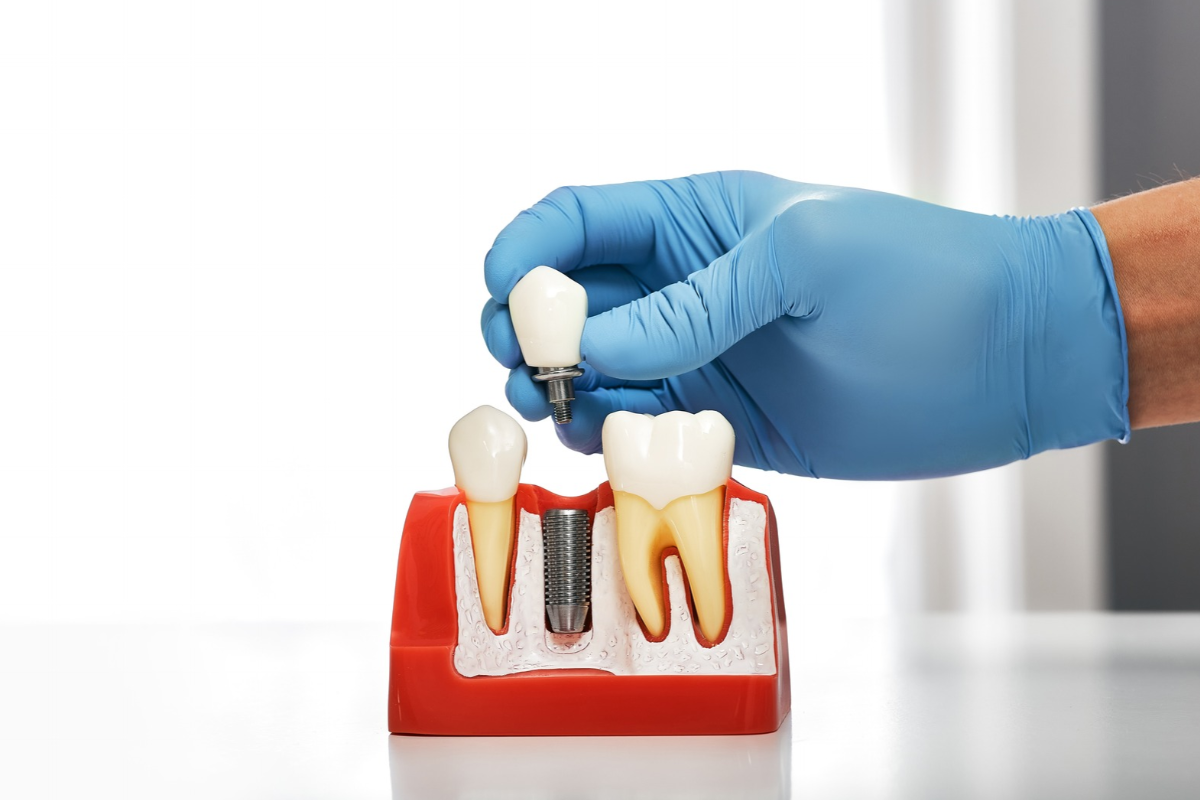
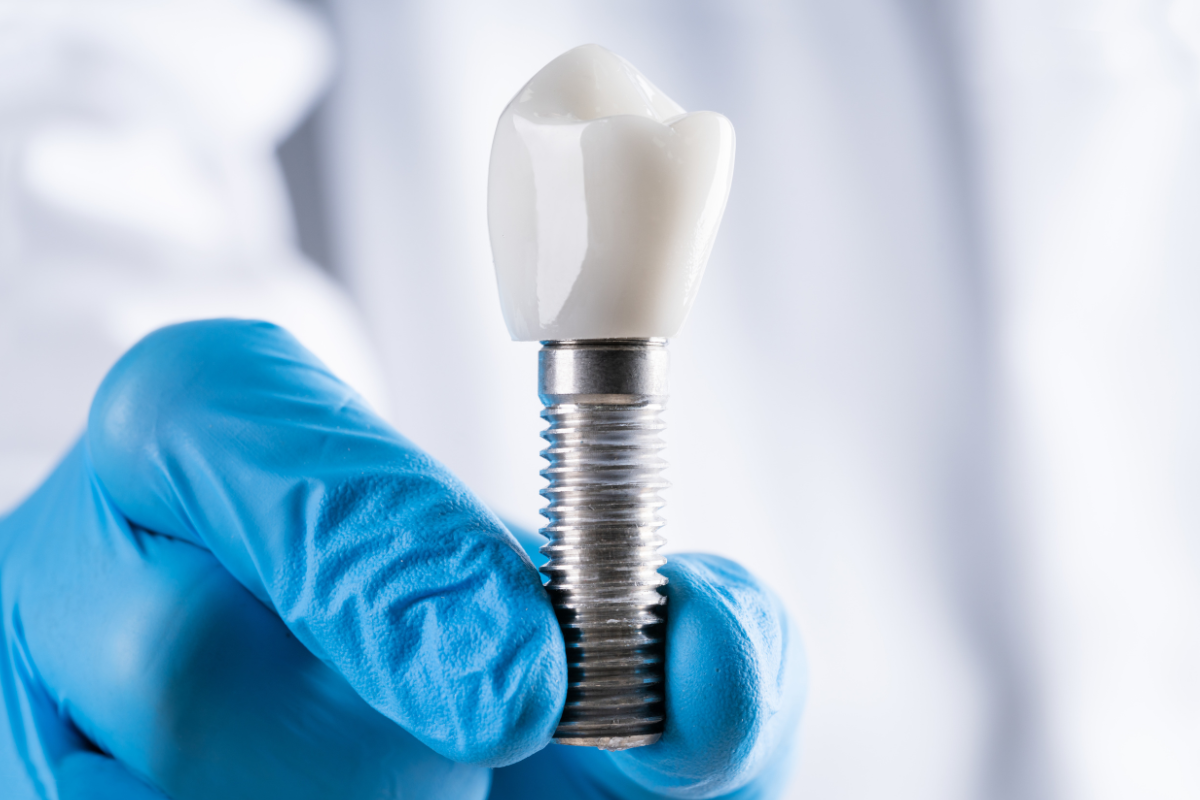
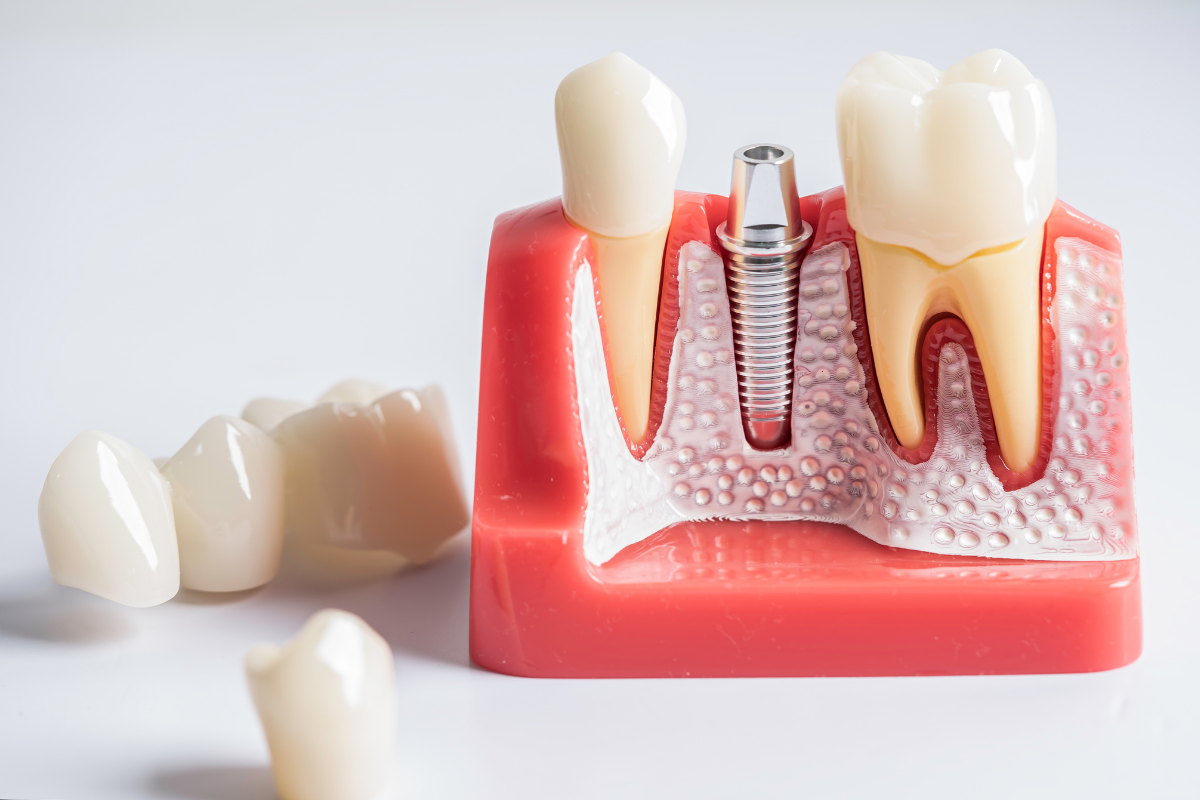
A typical implant restoration includes three components:
- Implant post: A post placed in the jawbone to serve as the artificial tooth root.
- Abutment: A connector that attaches the implant to the restoration.
- Crown: The visible replacement tooth for a single missing tooth.
Because the implant is independently supported by the jawbone, it does not have to be attached to an adjacent natural tooth in the same way a traditional dental bridge does.
That can make an implant-supported crown an option when a patient has one missing tooth surrounded by otherwise healthy teeth. Local McKinney implant practices similarly describe implants as a way to replace missing teeth without relying on adjacent teeth for support.
Can an Implant Be Placed Between Two Natural Teeth?
Yes, an implant can sometimes be placed in the space left by a missing tooth between two natural teeth.
This is one of the most common situations involving a single-tooth implant.
For example, imagine that a person loses one molar but still has healthy teeth in front of and behind the missing tooth. Depending on the individual’s anatomy and oral health, an implant-supported crown may replace the missing tooth without requiring those neighboring teeth to be used as supports.
The implant is planned for the space where the tooth root used to be.
However, the presence of healthy neighboring teeth does not automatically mean an implant is appropriate. The dentist must evaluate the available bone, gum tissue, bite, spacing, and overall condition of the area.
What If the Teeth Around the Missing Tooth Are Healthy?
Healthy neighboring teeth can be an important consideration when comparing tooth-replacement options.
A traditional dental bridge uses adjacent teeth as supports for the replacement tooth or teeth. An implant-supported crown, by contrast, can be supported by the implant itself.
That means the treatment discussion may involve questions such as:
- Are the neighboring teeth healthy?
- Do they already have large fillings or crowns?
- Is there enough bone where the tooth is missing?
- How much space is available for an implant and crown?
- How does the patient’s bite affect the area?
- Would an implant-supported restoration be appropriate for the location?
- Are there gum or periodontal concerns that need to be addressed first?
There is no single tooth-replacement solution that is ideal for every patient. The condition of the surrounding teeth is one factor that should be considered as part of the overall treatment plan.
What If You Have Several Natural Teeth and Several Missing Teeth?
Dental implants can also be used when a patient has multiple natural teeth remaining.
The treatment approach depends heavily on the pattern of tooth loss.
Several adjacent teeth are missing
If multiple teeth are missing next to one another, implants may be used to support an implant-supported bridge rather than placing one implant under every replacement tooth.
The exact number of implants depends on factors such as:
- The length of the missing-tooth area
- The location of the teeth
- Available bone
- Bite forces
- The planned restoration
- The condition of the surrounding tissues
This is different from automatically placing one implant for every missing tooth.
Missing teeth in different areas
A patient could have a missing molar on one side and a missing premolar somewhere else while retaining many healthy teeth throughout the mouth.
Those areas may be evaluated independently because the available bone, spacing, bite, and restorative needs can differ from one location to another.
Most natural teeth are still present
Someone does not need to be missing an entire arch to benefit from implant treatment.
In many cases, the goal is to restore specific missing teeth while keeping the natural teeth that are healthy and functional.
This is an important distinction for patients who may assume that having several natural teeth automatically rules out implants.
Do Healthy Natural Teeth Affect Dental Implant Candidacy?
They can affect treatment planning, but having natural teeth is generally not itself a reason to rule out implants.
The more important considerations include the health of the remaining teeth and the tissues supporting them.
Gum health matters
Healthy gums and supporting tissues are important for both natural teeth and dental implants.
If active gum disease is present, it may need to be addressed before implant placement. The condition of the gums around the remaining natural teeth can therefore become part of the overall implant evaluation.
The remaining teeth need to be evaluated
If some remaining teeth have extensive decay, cracks, severe bone loss, or other significant problems, the treatment plan may need to account for them.
A comprehensive evaluation helps determine which teeth are healthy enough to preserve and which teeth may require treatment.
The goal should not simply be to place an implant in a space. The surrounding oral environment matters too.
Your bite matters
The way the upper and lower teeth come together can affect implant planning.
An implant restoration needs to function within the patient’s existing bite. The dentist may consider chewing forces, available space, opposing teeth, and the position of neighboring teeth when determining the appropriate restoration.
What If a Natural Tooth Is Damaged but Not Missing?
This is where treatment planning becomes particularly important.
A tooth that is damaged is not automatically a tooth that should be removed and replaced with an implant.
If a natural tooth can be predictably restored or treated, preserving it may be considered before extraction and implant replacement.
On the other hand, a tooth that cannot be predictably saved may require extraction followed by consideration of a replacement option, including an implant.
This distinction is important because dental implants replace missing teeth; they are not generally a reason to remove healthy teeth simply to create an implant-supported smile.
A recent dental discussion on replacing healthy natural teeth with implants similarly emphasizes the value of preserving natural teeth whenever they can be maintained.
Can You Get an Implant Without Removing Your Other Teeth?
Yes. In the appropriate situation, an implant can replace a missing tooth while the surrounding natural teeth remain.
The implant is placed into the jawbone at the missing-tooth site, assuming the site has adequate conditions for treatment.
This is one of the major differences between an implant-supported crown and some traditional replacement approaches.
For a single missing tooth, the implant can provide independent support for the replacement crown rather than requiring the neighboring natural teeth to serve as bridge supports.
That does not mean an implant is always the best choice. A thorough examination is still necessary to determine whether it is appropriate for the individual patient.
What Happens During a Dental Implant Evaluation?
Before recommending an implant, your dental team needs to understand what is happening in the area and how the implant will fit into your overall bite and oral health.
An evaluation may involve:
Reviewing your dental history
Your dentist may ask about previous extractions, gum disease, dental restorations, medical conditions, medications, and previous implant treatment.
Examining the teeth and gums
The condition of the missing-tooth site and the surrounding natural teeth can be evaluated.
Assessing available bone
The jawbone needs to provide appropriate support for the planned implant. If there has been significant bone loss after tooth loss, additional treatment may sometimes be considered.
Evaluating the bite and spacing
The available space and relationship between the upper and lower teeth can influence implant positioning and restoration design.
Using dental imaging when appropriate
Imaging can help evaluate the bone and anatomical structures around the proposed implant site. Advanced 3D imaging is commonly used in implant treatment planning, particularly when more detailed information about the jaw anatomy is needed. McKinney implant practices emphasize CBCT and 3D planning as part of their implant workflows.
The purpose of this evaluation is to develop a treatment plan based on the patient’s actual anatomy rather than assuming that every missing tooth should be treated in exactly the same way.
What If You Have Bone Loss Where the Tooth Is Missing?
Having natural teeth elsewhere in your mouth does not guarantee that the missing-tooth site has enough bone for an implant.
After a tooth is lost, the bone in that area can gradually change. The amount and location of bone available can affect whether an implant can be placed as planned.
Depending on the situation, a dentist may discuss options such as bone grafting before or as part of implant treatment.
The existing Innovative Dental Specialists of McKinney implant information explains that insufficient bone may require bone grafting to create appropriate support for an implant.
This is another reason why an implant consultation should focus on the specific missing-tooth site, not simply whether you have enough natural teeth remaining.
Dental Implant vs. Bridge When You Have Healthy Teeth
Patients with one missing tooth and healthy neighboring teeth often want to understand how an implant compares with a traditional bridge.
A simplified comparison looks like this:
| Consideration | Implant-Supported Crown | Traditional Bridge |
| Supports the replacement tooth | Implant in jawbone | Adjacent teeth |
| Requires surgery | Yes | Generally no implant surgery |
| Neighboring teeth used as supports | No | Yes |
| Requires adequate implant site conditions | Yes | Different requirements |
| Can preserve healthy neighboring teeth from bridge preparation | Potentially | Typically requires preparation of support teeth |
| Treatment timeline | Includes healing/integration | Usually does not require implant integration |
Neither option is automatically right for every patient.
A dentist should consider the condition of the adjacent teeth, bone, gums, bite, location of the missing tooth, overall health, treatment preferences, and long-term maintenance requirements.
What About Patients With a Combination of Implants and Natural Teeth?
A combination of natural teeth and implants can function together as part of the same overall smile.
For example, a patient might have:
- Natural front teeth
- One implant-supported premolar
- Natural molars
- Another implant-supported crown on the opposite side
The goal is not to make every tooth an implant. The goal is to create a functional and maintainable restoration while preserving healthy structures whenever possible.
Your implant dentist can evaluate how the replacement teeth should fit with your existing natural teeth and bite.
Why an Individualized Implant Plan Matters
One of the biggest mistakes patients can make is assuming that dental implants follow a one-size-fits-all formula.
Two people who are each missing one tooth may have very different treatment plans.
One person might have:
- Healthy gums
- Good bone volume
- Adequate spacing
- A stable bite
- A straightforward implant site
Another person might have:
- Bone loss
- Gum disease
- A heavily restored neighboring tooth
- Limited space
- A history of trauma
- A more complicated bite
The missing tooth may be the same, but the clinical circumstances are not.
That is why an implant consultation should evaluate the entire area rather than focusing only on the gap.
Dental Implants in McKinney, TX
If you have missing teeth but still have many healthy natural teeth, you may not need to consider replacing all of your teeth.
At Innovative Dental Specialists of McKinney, we provide implant services designed around each patient’s individual oral health, missing-tooth pattern, bone support, and restorative needs. Our team can evaluate the relationship between the missing tooth and the natural teeth around it and discuss appropriate replacement options.
For patients in McKinney and surrounding North Texas communities, an implant evaluation can help answer an important question: Can the missing tooth be replaced while preserving the natural teeth that are still healthy?
Frequently Asked Questions
Can I get a dental implant if I still have most of my natural teeth?
Yes. Dental implants are commonly used to replace individual missing teeth or several missing teeth while other natural teeth remain. Your oral health, bone, gums, bite, and specific tooth-loss pattern will help determine the appropriate treatment.
Can a dental implant be placed between two natural teeth?
Yes, when the space, bone, gums, and surrounding anatomy are appropriate. A single implant can support a crown in the space left by a missing tooth without using the neighboring natural teeth as bridge supports.
Do I have to remove healthy teeth before getting dental implants?
Generally, healthy natural teeth are not removed simply to place implants. If a tooth is damaged or diseased, your dentist will determine whether it can be predictably treated or whether replacement should be considered.
Can you have dental implants and natural teeth at the same time?
Yes. Many patients have a combination of natural teeth and implant-supported restorations. The implant restoration is planned to work within the patient’s existing teeth and bite.
What if I have gum disease but still want dental implants?
Active gum disease may need to be addressed before implant treatment. An evaluation can determine the health of your gums, natural teeth, and proposed implant site and whether additional periodontal treatment is appropriate.
Talk With an Implant Dentist in McKinney
Having natural teeth does not automatically disqualify you from dental implants. In many cases, implants are used precisely to replace specific missing teeth while preserving the healthy natural teeth that remain.
The right approach depends on your individual teeth, gums, jawbone, bite, and restoration needs.
If you are considering dental implants in McKinney, TX, the team at Innovative Dental Specialists of McKinney can evaluate your smile and discuss whether an implant-supported restoration may be appropriate for your missing tooth or teeth. Schedule an implant consultation to get a personalized treatment plan based on your oral health and goals.

New Patients Appointments Welcome!
