


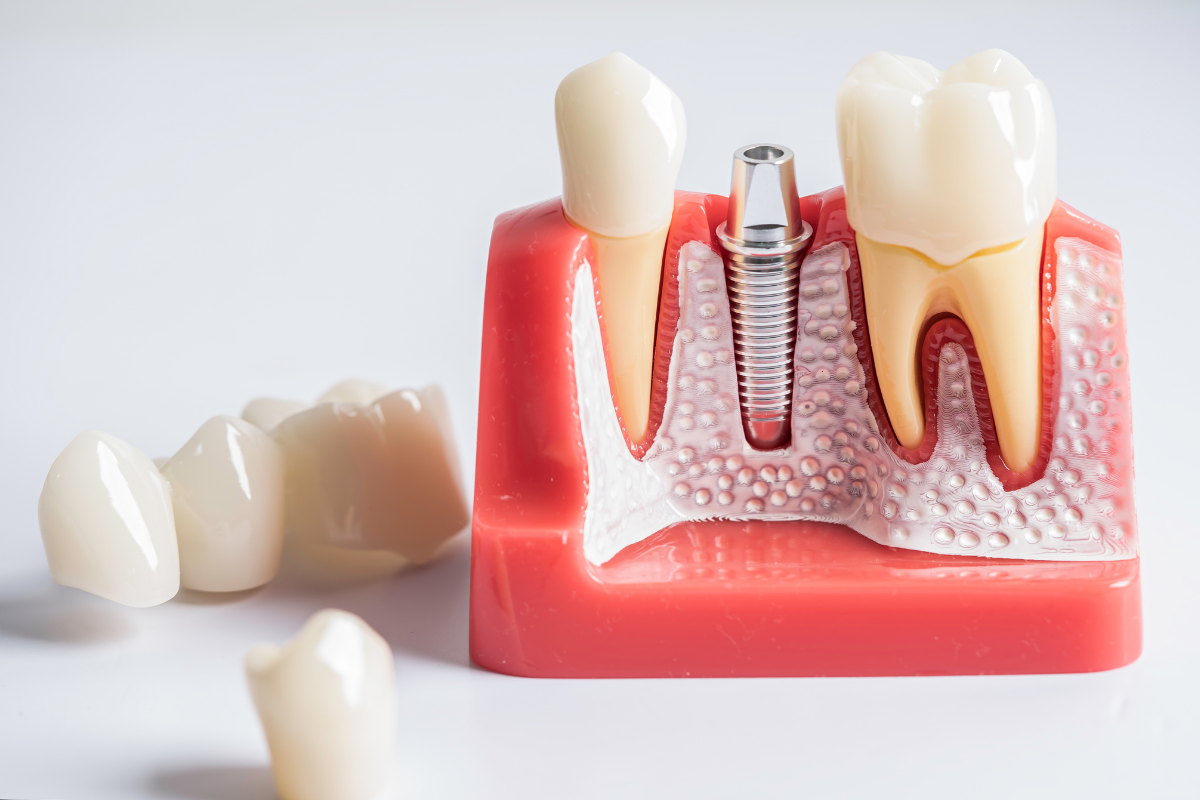
Losing several teeth can make everyday activities such as eating, speaking, and smiling feel more difficult. If you have multiple gaps, you may assume that replacing every missing tooth requires a separate dental implant. Fortunately, that is not always the case. Modern implant dentistry allows dentists to use strategically placed implants to support multiple replacement teeth, depending on the location of the missing teeth and your overall oral health.
The number of implants you need is determined through a personalized evaluation rather than a one-size-fits-all formula. Factors such as the number and position of missing teeth, available jawbone, gum health, bite, and the type of restoration being considered can all influence your treatment plan.
If you are considering an implant dentist in McKinney, understanding how implant treatment is planned can help you feel more prepared for your consultation with Innovative Dental Specialists of McKinney.
Do You Need One Implant for Every Missing Tooth?
Not necessarily.
A common misconception is that if you are missing three teeth, you automatically need three implants. In reality, the number of implants can depend on how the missing teeth are positioned and what type of restoration will be used.
For example, a patient who has several adjacent missing teeth may be able to have an implant-supported bridge rather than an individual implant and crown for every missing tooth.
An implant-supported restoration can use strategically positioned implants to support multiple replacement teeth.
The treatment plan may involve:
- A single implant and crown for one missing tooth
- Multiple individual implants for separate missing teeth
- Two or more implants supporting an implant bridge
- Several implants supporting a larger restoration
- Four or more implants supporting a full arch in appropriate cases
Your dentist will determine which approach best fits your anatomy, oral health, and treatment goals.
How Many Implants Are Usually Needed for Multiple Missing Teeth?
There is no universal number because every patient’s situation is different. However, understanding the common treatment approaches can give you a better idea of what may be recommended.
One Missing Tooth
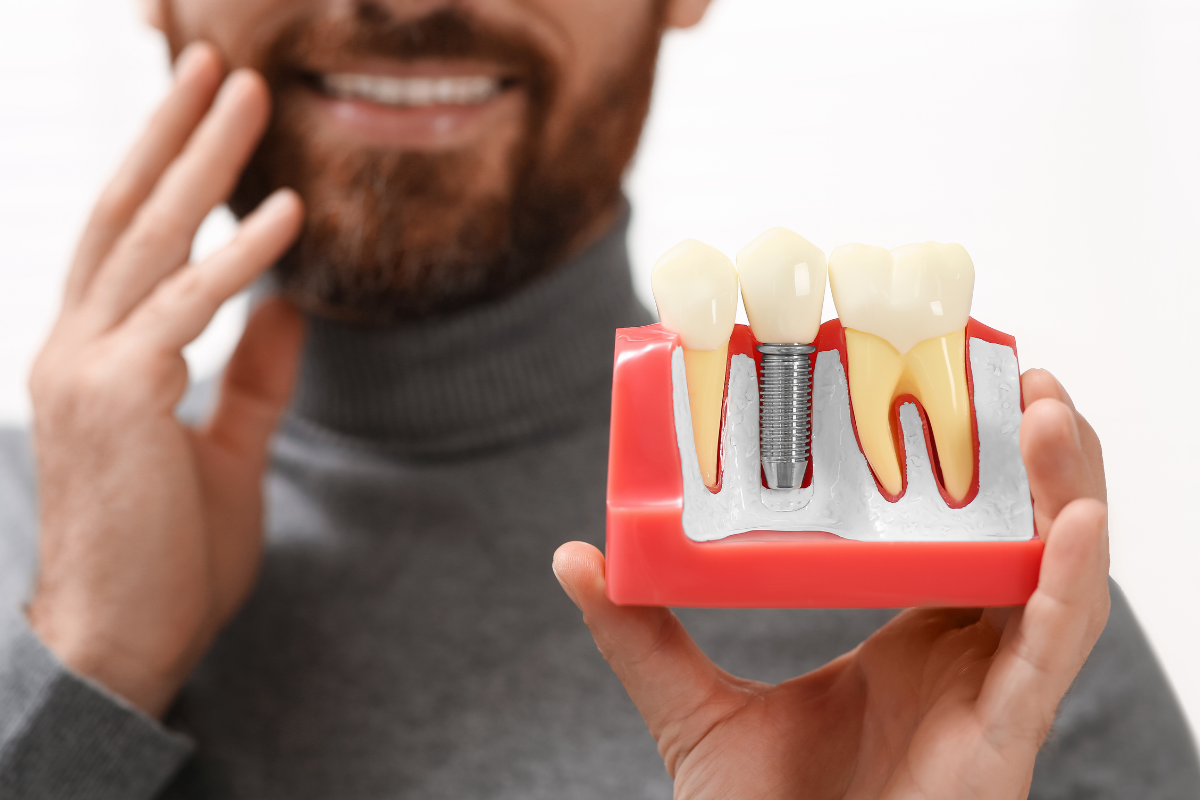
When only one tooth is missing, one dental implant is commonly used to support a single crown.
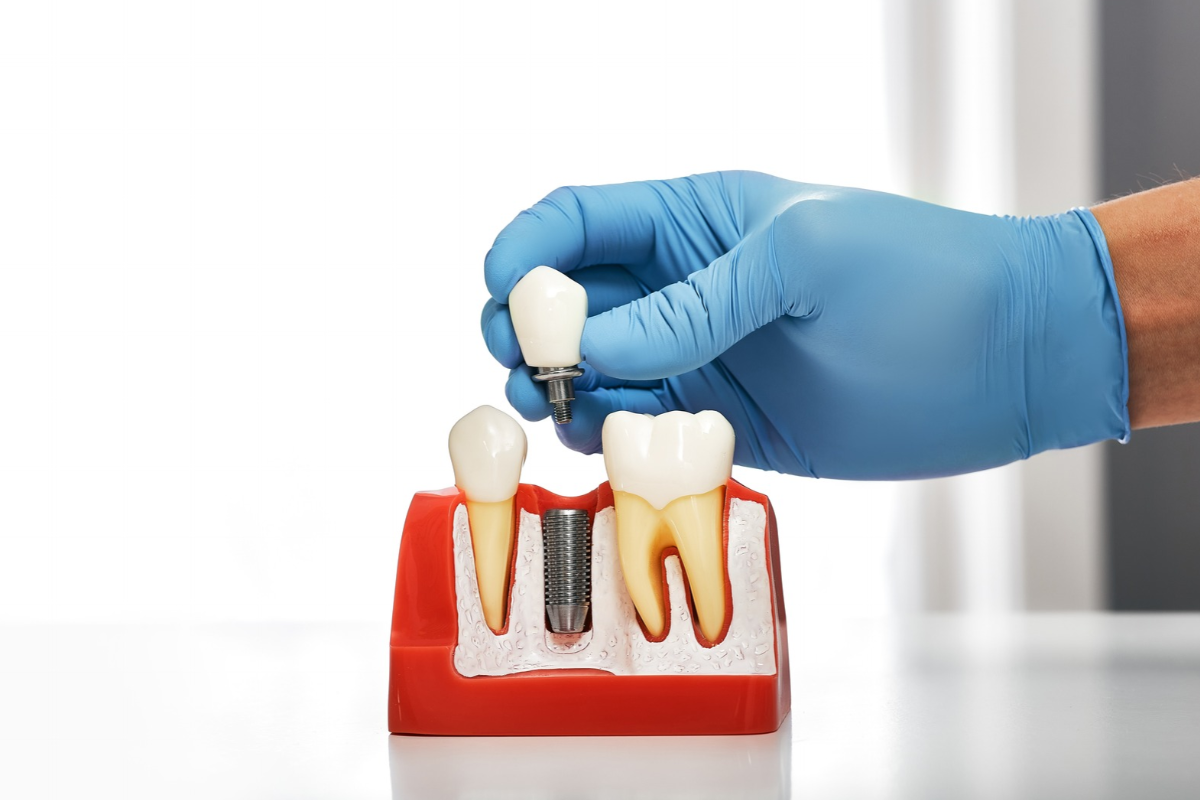
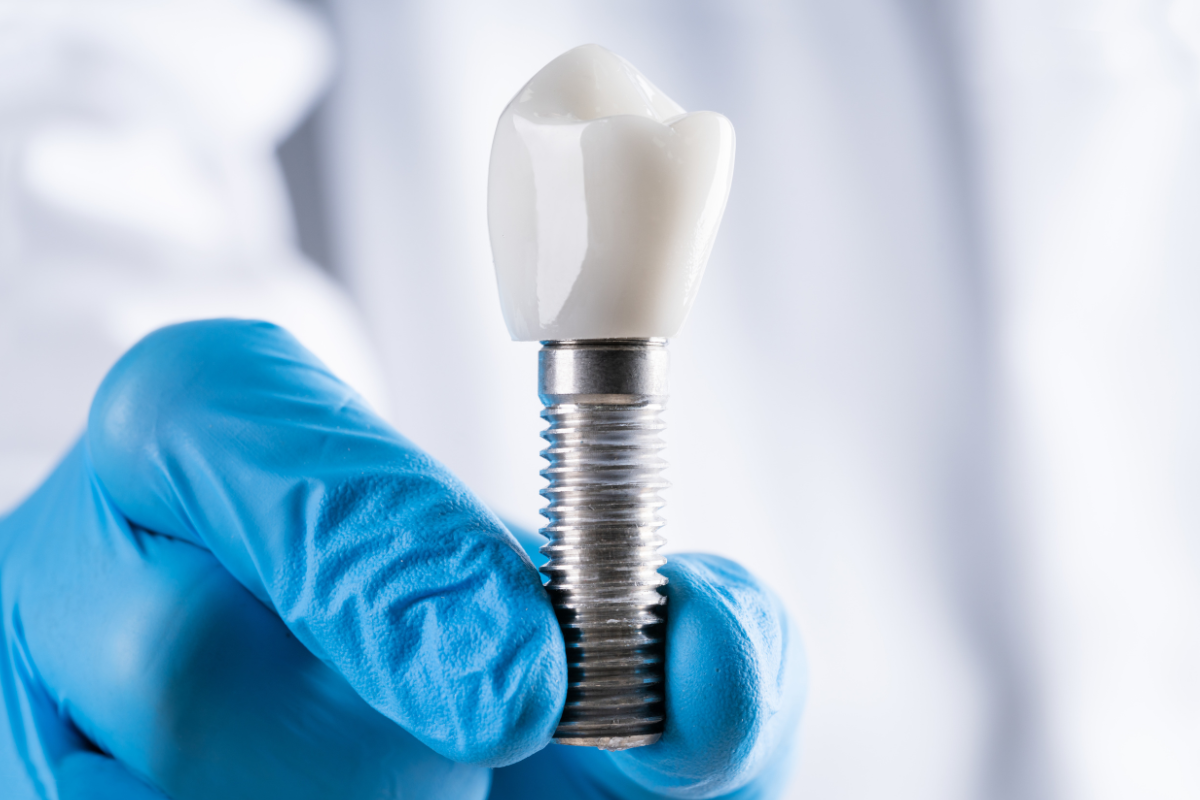
The implant acts as an artificial tooth root, while the crown replaces the visible portion of the tooth.
One advantage of this approach is that the replacement tooth can be supported independently rather than relying on neighboring natural teeth for support.
Two or More Adjacent Missing Teeth
When several teeth are missing next to each other, an implant-supported bridge may be an option.
Instead of placing an implant underneath every replacement tooth, strategically positioned implants can support a bridge containing multiple replacement teeth.
For example, two implants may support a bridge that replaces several adjacent teeth in some treatment plans. The exact number depends on factors such as the location of the teeth, bite forces, available bone, and the planned restoration.
This approach can reduce the number of implants needed while still providing a stable foundation for replacement teeth.
Multiple Missing Teeth in Different Areas
If missing teeth are scattered throughout the mouth, the treatment plan can be more individualized.
You may need several individual implants or a combination of implant-supported restorations.
For example, you might have:
- One missing molar on one side
- Two missing premolars on the opposite side
- Several missing front teeth
These situations are different from having several consecutive missing teeth. Your dentist will evaluate each area and determine how the restorations can work together.
What If You Are Missing Most of Your Teeth?
When a patient has lost most or all of the teeth in an upper or lower arch, placing one implant for every missing tooth is generally not necessary.
Instead, full-arch implant solutions can use strategically positioned implants to support a complete set of replacement teeth.
All-on-4 and Full-Arch Implant Solutions
All-on-4 is one example of a full-arch treatment approach. Innovative Dental Specialists of McKinney provides All-on-4 treatment for patients who require full upper or lower arch restoration.
The practice explains that the procedure uses four titanium implants to support an entire arch, with 3D CT scan planning used to determine implant placement.
This type of treatment can be considered when a patient has extensive tooth loss and wants a fixed restoration rather than replacing every missing tooth individually.
However, All-on-4 is not automatically appropriate for everyone. A dental professional must evaluate your oral health, bone structure, remaining teeth, and overall treatment needs before recommending a full-arch approach.
What Determines How Many Dental Implants You Need?
The number of implants is based on several factors. During your consultation, your dental team will look beyond simply counting the missing teeth.
1. Number of Missing Teeth
Naturally, the number of missing teeth matters, but it is only the starting point.
Two patients can lose the same number of teeth and still receive different implant treatment plans because their teeth may be positioned differently.
2. Location of the Missing Teeth
The location of the gaps can influence how implants are positioned.
Front teeth generally experience different functional demands than back teeth. Molars, for example, play an important role in chewing and can experience substantial biting forces.
Your dentist will consider the location and function of each missing tooth when planning your restoration.
3. Available Jawbone
Dental implants require adequate bone support.
When teeth have been missing for an extended period, the jawbone can change because the tooth roots are no longer providing normal stimulation.
If there is insufficient bone in an area, additional treatment may sometimes be recommended before implant placement.
This is why dental imaging is an important part of implant planning.
4. Your Bite
Your bite affects how force is distributed when you chew.
If you have a strong bite, grinding or clenching habits, or an uneven bite, your dentist may take these factors into account when determining implant placement and restoration design.
The goal is not simply to replace the missing teeth. The goal is to create a restoration that functions appropriately within your overall bite.
5. Gum Health
Healthy gums and supporting tissues are important for successful implant treatment.
If gum disease is present, your dental team may recommend periodontal treatment before moving forward with implant placement.
Because Innovative Dental Specialists of McKinney focuses on periodontal and implant care, evaluating the health of the gums and supporting structures can be an important part of comprehensive treatment planning.
6. Type of Restoration
The final restoration has a major impact on the number of implants needed.
Depending on your situation, your dentist may discuss:
- Individual implant crowns
- Implant-supported bridges
- Implant-supported dentures
- Full-arch implant restorations
- All-on-4 or other full-arch approaches
The objective is to select an appropriate number and position of implants to provide stable support for your replacement teeth.
Why Strategic Implant Placement Matters
More implants do not automatically mean a better treatment plan.
The goal is to place the appropriate number of implants in locations that provide adequate support for the planned restoration.
Strategic placement can help:
- Support multiple replacement teeth
- Distribute chewing forces
- Take advantage of available bone
- Create a stable foundation
- Support the design of the final restoration
- Avoid unnecessary implant placement when fewer implants can provide appropriate support
Modern imaging and treatment planning can help your dental team understand the anatomy before treatment begins.
At Innovative Dental Specialists of McKinney, our All-on-4 treatment uses 3D CT scan planning to help determine where implants can be placed. This type of planning allows the dental team to evaluate the available anatomy and develop a treatment approach based on the patient’s specific needs.
What Happens During a Multiple-Implant Consultation?
If you are missing several teeth, your first appointment is an opportunity to understand your options rather than immediately committing to treatment.
Your dentist may evaluate:
Your remaining teeth:
The condition of your natural teeth can affect whether they should be retained, restored, or considered as part of a broader treatment plan.
Your gums:
Healthy supporting tissues are important when planning implant treatment.
Your jawbone:
Imaging can help your dental team evaluate bone structure and determine whether there is sufficient support for the planned implants.
Your bite:
Your dentist will consider how your upper and lower teeth come together and how chewing forces may affect the restoration.
Your treatment goals:
Some patients want to replace a few missing teeth, while others may be looking for a fixed solution for an entire arch.
Your treatment plan should reflect your individual needs rather than simply following a predetermined number of implants.
Can You Get Dental Implants If You Have Been Missing Teeth for Years?
Possibly.
The amount of time a tooth has been missing does not automatically rule out implant treatment. However, prolonged tooth loss can be associated with changes in the jawbone.
If bone volume has decreased, your dentist may need to evaluate whether additional treatment is necessary before implants can be placed.
This is why it is better to schedule an evaluation rather than assume that you are no longer a candidate.
A local dental practice can assess your current condition and explain what options are available based on your anatomy and oral health.
Are More Dental Implants Always Better?
No.
The ideal treatment plan is not necessarily the one involving the greatest number of implants.
Placing additional implants may be appropriate in some situations, while another patient may receive excellent support from fewer strategically positioned implants.
Your dentist will consider the restoration being supported, the available bone, bite forces, gum health, and other factors before determining the appropriate number.
This individualized approach can help avoid unnecessary treatment while still providing adequate support for your replacement teeth.
Why Choose Innovative Dental Specialists of McKinney?
At Innovative Dental Specialists of McKinney, we provide specialized periodontal and implant-focused care for patients dealing with missing teeth and other oral health concerns.
Our services include implant treatment and full-arch solutions such as All-on-4. We use detailed treatment planning to evaluate each patient’s individual needs rather than assuming that the same implant approach works for everyone.
For patients considering multiple dental implants, having an experienced oral care provider evaluate both the gums and supporting structures can be especially valuable.
Our goal is to help you understand your options, address underlying oral health concerns when necessary, and develop a treatment plan designed around your smile and functional needs.
If you are searching for an implant dentist in McKinney, TX, we can help you determine whether individual implants, an implant-supported bridge, or a full-arch solution may be appropriate for your situation.
Frequently Asked Questions
How many dental implants do I need if I am missing three teeth?
It depends on the location of the missing teeth and the restoration being planned. If the teeth are adjacent, an implant-supported bridge may allow fewer implants to support multiple replacement teeth. Your dentist can determine the appropriate number after evaluating your oral health and bite.
Can two dental implants replace three missing teeth?
In some cases, yes. Two strategically positioned implants may be able to support a bridge replacing several adjacent teeth. However, the appropriate number depends on bone support, tooth location, bite forces, and the design of the restoration.
How many implants are needed for a full mouth?
The number varies depending on whether you need individual restorations, an implant-supported denture, or a full-arch treatment such as All-on-4. A full-arch restoration can replace many teeth using strategically placed implants rather than one implant per tooth.
Do I need a dental implant for every missing tooth?
No. Multiple missing teeth can sometimes be replaced using an implant-supported bridge or full-arch restoration. The number of implants is determined by your specific treatment plan.
Can I get multiple dental implants if I have bone loss?
Possibly. Your dentist will need to evaluate the amount and location of available bone. Depending on your situation, additional treatment may be recommended before implant placement, while some full-arch approaches may be designed to work with available areas of bone.
Restore More Than the Missing Teeth
When you lose multiple teeth, it is natural to wonder how many implants you will need. The answer is not always as simple as counting the gaps in your smile.
Depending on your situation, one implant may replace a single tooth, several strategically positioned implants may support an implant bridge, or a full-arch restoration may replace an entire row of teeth using a carefully planned number of implants.
The right approach depends on your jawbone, gums, remaining teeth, bite, overall oral health, and treatment goals.
At Innovative Dental Specialists of McKinney, we provide personalized implant and periodontal care to help patients understand their options for replacing missing teeth. If you are considering dental implants mckinney, our team can evaluate your smile and explain which treatment approach may be appropriate for you.
Schedule your consultation today and take the next step toward a stronger, more complete smile.

New Patients Appointments Welcome!
