


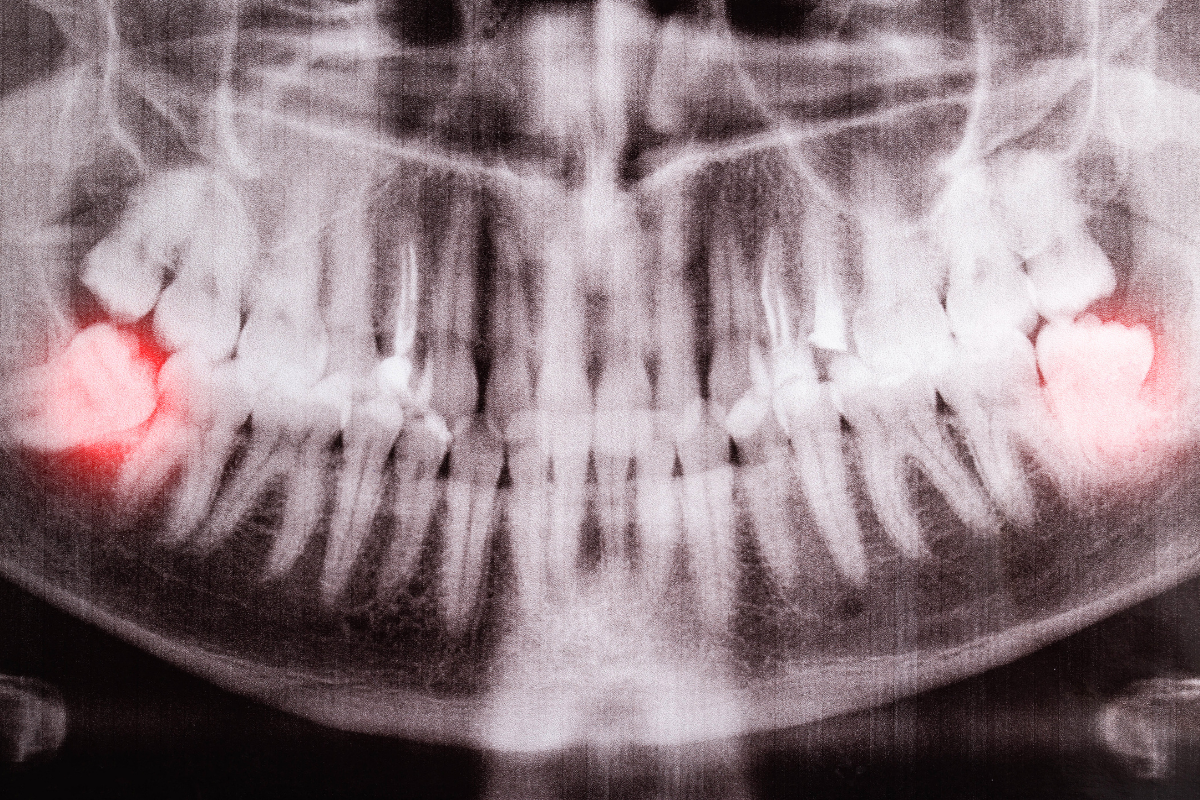
An impacted wisdom tooth can sometimes cause problems beyond the tooth itself. Because wisdom teeth sit directly behind the second molars, an improperly positioned third molar may press against, trap food around, or create conditions that damage the neighboring tooth. The problem can develop gradually, and some people may not notice symptoms until the second molar has already been affected.
This is one reason dental X-rays are important when evaluating wisdom teeth. The position of the roots and crown, the amount of available space, and the relationship between the wisdom tooth and the second molar can help determine whether monitoring or wisdom teeth removal in McKinney may be appropriate.
An impacted wisdom tooth does not automatically mean the tooth next to it will be damaged. However, certain positions and patterns of impaction can increase the risk of decay, gum problems, bone loss, or other damage involving the neighboring molar.
How Can an Impacted Wisdom Tooth Damage the Tooth Next to It?
The tooth directly in front of a wisdom tooth is called the second molar. When a wisdom tooth becomes impacted, particularly when it grows forward toward the second molar, the two teeth can become very difficult to keep clean.
Several different problems can develop.
1. Food and Bacteria Can Become Trapped
A partially erupted or angled wisdom tooth can create a narrow space between itself and the second molar.
Food particles and bacteria may become trapped in this area, particularly when the space is difficult to reach with a toothbrush or floss.
Over time, this can contribute to:
- Tooth decay
- Gum inflammation
- Bad breath
- Recurrent infection
- Periodontal problems around the second molar
The issue is not simply that the wisdom tooth is difficult to clean. Its position can make the neighboring second molar harder to clean as well.
Mayo Clinic notes that impacted wisdom teeth are difficult to clean and can be associated with tooth decay and gum disease, while an impacted tooth growing toward the second molar may damage that neighboring tooth or increase the risk of infection in the area.
2. The Second Molar Can Develop a Cavity
A cavity does not have to begin on the wisdom tooth itself.
When a wisdom tooth is tilted toward the second molar, bacteria and food debris can collect along the contact area between the two teeth. If the area cannot be adequately cleaned, decay may develop on the back portion of the second molar.
This can be particularly concerning because the patient may not be able to see the affected area.
A wisdom tooth may look relatively normal from the outside while an X-ray reveals decay or structural damage involving the neighboring tooth.
3. The Gum and Bone Around the Second Molar Can Be Affected
An impacted wisdom tooth can also contribute to periodontal problems around the second molar.
If bacteria repeatedly accumulate between the teeth, the gum tissue can become inflamed. In some cases, the supporting bone around the second molar may also be affected.
That matters because the second molar is an important chewing tooth. Damage to it can create a problem that extends beyond the wisdom tooth itself.
4. Pressure From the Wisdom Tooth Can Contribute to Damage
Some impacted wisdom teeth grow at an angle toward the second molar. Depending on the position and anatomy, the wisdom tooth may come into direct contact with the neighboring tooth.
This does not mean every impacted wisdom tooth will push the other teeth out of alignment or cause crowding.
The important concern is the physical relationship between the two teeth.
Mayo Clinic specifically identifies an impacted wisdom tooth growing toward the second molar as one possible pattern of impaction and lists damage to nearby teeth among the potential complications.
What Types of Damage Can Occur to the Neighboring Tooth?
The effect on the second molar depends on the position of the wisdom tooth and the condition of the surrounding tissues.
Potential problems include:
- Decay: A cavity may develop where the two teeth are difficult to clean.
- Gum inflammation: Bacteria and food debris can irritate the surrounding tissues.
- Periodontal damage: Persistent inflammation may affect the tissues and bone supporting the second molar.
- Structural damage: An impacted wisdom tooth can contribute to damage involving the neighboring tooth.
- Root-related problems: In some cases, the relationship between the wisdom tooth and second molar can affect the root area.
- Infection: Bacteria trapped around an impacted or partially erupted wisdom tooth can contribute to infection in the surrounding area.
Not every patient will experience these complications. The risk depends heavily on the tooth’s position, eruption pattern, oral hygiene, anatomy, and other individual factors.
Can an Impacted Wisdom Tooth Damage a Healthy Tooth Without Causing Pain?
Yes.
This is one of the most important things to understand about impacted wisdom teeth.
Pain is not a reliable indicator of whether damage is occurring.
Some impacted wisdom teeth remain relatively quiet for long periods. A patient may have no significant swelling or discomfort while an X-ray shows that the wisdom tooth is positioned against the second molar or that changes have developed around the area.
Mayo Clinic notes that impacted wisdom teeth do not always cause symptoms, even though they can cause damage to other teeth or other dental problems.
That is why regular dental examinations and appropriate imaging can be important when wisdom teeth are still present.
How Can a Dentist Tell If a Wisdom Tooth Is Damaging the Next Tooth?
A clinical examination provides useful information, but dental imaging is often essential for evaluating an impacted wisdom tooth.
Dental X-Rays
An X-ray can help show:
- Whether the wisdom tooth is impacted
- The angle of the wisdom tooth
- How close it is to the second molar
- Whether the teeth appear to be contacting each other
- The condition of the surrounding bone
- Changes involving the neighboring tooth
Mayo Clinic explains that dental X-rays can show impacted wisdom teeth and signs of damage involving teeth or bone.
Additional Imaging When Appropriate
Some wisdom teeth have a more complicated relationship with surrounding structures. Depending on the clinical situation, a dentist or specialist may determine that additional imaging is useful for treatment planning.
The goal is not simply to obtain an image. It is to understand the anatomy well enough to make an informed decision about whether the wisdom tooth should be monitored, treated, or removed.
What Does a Dentist Look for on the X-Ray?
When an impacted wisdom tooth is close to the second molar, several details can be important.
The Direction of the Wisdom Tooth
A wisdom tooth may be:
- Upright but unable to erupt
- Tilted forward toward the second molar
- Tilted backward
- Positioned horizontally
- Fully covered by gum or bone
A forward-angled or horizontal wisdom tooth may be more likely to contact the second molar than a tooth that is positioned farther away.
The Space Between the Teeth
The dentist may evaluate whether there is a narrow area where food and bacteria could become trapped.
Even if the teeth do not appear severely damaged yet, the anatomy may indicate that maintaining the area could be difficult.
The Condition of the Second Molar
The neighboring tooth itself needs to be assessed.
The dentist may look for evidence of:
- Decay
- Bone loss
- Changes around the root
- Gum problems
- Structural damage
This is important because treatment planning should consider the health of both teeth, not just the wisdom tooth.
Does Every Impacted Wisdom Tooth Need to Be Removed?
Not necessarily.
This is an important distinction because an impacted wisdom tooth does not automatically mean that extraction is required.
Dental professionals may consider several factors, including:
- Whether the tooth is causing symptoms
- Whether it is damaging the second molar
- Whether infection or gum disease is present
- Whether the tooth can be adequately cleaned
- The tooth’s position and development
- The patient’s age and overall oral health
- Whether there is evidence of cystic or other pathological changes
- Whether continued monitoring is reasonable
Mayo Clinic notes that dental specialists do not all take the same approach to asymptomatic impacted wisdom teeth. Some recommend removal when the tooth presents a significant future risk, while others may recommend monitoring when there is no evidence of disease or damage.
That makes an individualized evaluation particularly important.
What If the Wisdom Tooth Is Already Damaging the Second Molar?
If imaging shows that an impacted wisdom tooth is damaging the neighboring tooth, the dentist will consider the condition of both teeth.
The treatment decision may depend on whether the second molar is healthy and restorable, how severe the damage is, and the position of the wisdom tooth.
In many situations, removing the problematic wisdom tooth may be recommended to prevent additional damage. However, the exact approach depends on the clinical findings.
The earlier the issue is identified, the more information the dental team has when considering the available options.
Can Removing the Wisdom Tooth Protect the Second Molar?
When an impacted wisdom tooth is identified as the source of a problem, removing it may help eliminate the source of pressure, food trapping, or inflammation.
However, extraction cannot reverse damage that has already occurred to the second molar.
For example, if the neighboring tooth has already developed significant decay, periodontal damage, or structural problems, that tooth may need separate treatment.
This is why the goal of a wisdom tooth evaluation is not simply to determine whether the third molar should come out. It is also to determine whether the surrounding teeth and tissues have already been affected.
Why Waiting for Pain May Not Be the Best Strategy
A common misconception is that a wisdom tooth only needs attention when it starts hurting.
But an impacted tooth can remain painless while still creating a difficult environment around the second molar.
The American Association of Oral and Maxillofacial Surgeons identifies damage to adjacent teeth as one of the potential complications associated with impacted wisdom teeth.
That does not mean every asymptomatic wisdom tooth should automatically be removed. Instead, it reinforces the value of evaluating the tooth’s position and monitoring for changes.
A routine examination may identify a developing problem before it becomes a painful dental emergency.
Signs That Your Wisdom Tooth May Be Affecting the Tooth Next to It
Although symptoms are not always present, some warning signs deserve a dental evaluation.
Watch for:
- Pain behind the second molar
- Pain when biting in the back of the mouth
- Swelling or tenderness near the wisdom tooth
- Food repeatedly getting trapped between the teeth
- Persistent bad breath or an unpleasant taste
- Gum bleeding around the back molars
- Sensitivity involving the second molar
- Recurrent infections around the wisdom tooth
- Difficulty cleaning the area
- New or unexplained discomfort at the back of the jaw
These symptoms do not necessarily mean the wisdom tooth has damaged the second molar. Other dental conditions can produce similar symptoms.
An examination and appropriate imaging are needed to determine the actual cause.
What Happens During a Wisdom Teeth Evaluation in McKinney?
At Innovative Dental Specialists of McKinney, our team evaluates wisdom teeth based on their position, surrounding tissues, and the patient’s overall oral health.
The process may include a discussion of your symptoms and dental history, an examination of the wisdom tooth area, and dental imaging to understand how the tooth relates to neighboring structures.
Our existing wisdom teeth removal service explains that factors such as tooth size, mouth shape, and wisdom tooth positioning help determine whether extraction is appropriate.
That individualized approach matters when an impacted wisdom tooth is close to a second molar. The goal is to understand what is happening now and what risks may develop if the tooth remains in place.
Why Choosing Timely Wisdom Teeth Care Matters
If an impacted wisdom tooth is putting a neighboring molar at risk, delaying an evaluation may allow a problem to progress without obvious symptoms.
The second molar is a functional adult tooth that you may rely on for chewing for decades. Protecting it is therefore an important consideration when evaluating a problematic wisdom tooth.
At the same time, extraction is not a decision that should be based solely on age or fear of future problems. A dentist should consider the actual position of the tooth and evidence of disease or damage.
That balance- identifying genuine risk without recommending unnecessary treatment is an important part of responsible dental care.
Frequently Asked Questions
Can a wisdom tooth cause a cavity in the tooth next to it?
Yes. An impacted or partially erupted wisdom tooth can create a difficult-to-clean space against the second molar. Food and bacteria may become trapped there, increasing the risk of decay in the neighboring tooth.
Can an impacted wisdom tooth damage the roots of the tooth next to it?
It can. The position of an impacted wisdom tooth may affect the neighboring second molar and its surrounding structures. Dental imaging helps determine whether there are changes involving the root or surrounding bone.
Can a wisdom tooth damage the second molar without causing pain?
Yes. Impacted wisdom teeth may cause no noticeable symptoms while still creating conditions that affect a neighboring tooth. Regular examinations and appropriate X-rays can help identify problems that are not yet causing pain.
Does removing a wisdom tooth prevent damage to the neighboring tooth?
If the wisdom tooth is causing or contributing to the problem, removal may eliminate that source of pressure, food trapping, or inflammation. However, existing damage to the second molar may require separate treatment.
Should I remove an impacted wisdom tooth if it is not hurting?
Not necessarily. The decision depends on its position, surrounding tissues, ability to be maintained, and whether there is evidence of disease or damage. A dental evaluation can help determine whether removal or monitoring is more appropriate.
Conclusion
An impacted wisdom tooth can damage the tooth next to it, particularly when it grows toward the second molar or creates an area where food and bacteria become trapped. Possible problems include decay, gum disease, bone changes, infection, and other damage involving the neighboring tooth.
The important point is that you do not have to wait for severe pain before having the area evaluated. An impacted wisdom tooth may cause problems without obvious symptoms, and dental imaging can reveal its position and relationship to the second molar.
If you are experiencing pain, swelling, recurring infections, or difficulty cleaning around a wisdom tooth, or if an X-ray has shown that your wisdom tooth is close to another molar, our team at Innovative Dental Specialists of McKinney can evaluate the situation and explain your options.
If you’re looking for wisdom teeth removal in McKinney, contact Innovative Dental Specialists of McKinney to schedule an evaluation and find out whether your wisdom tooth could be affecting the health of the tooth next to it.

New Patients Appointments Welcome!
